
Pancreatic Cancer UK: emotional support resources
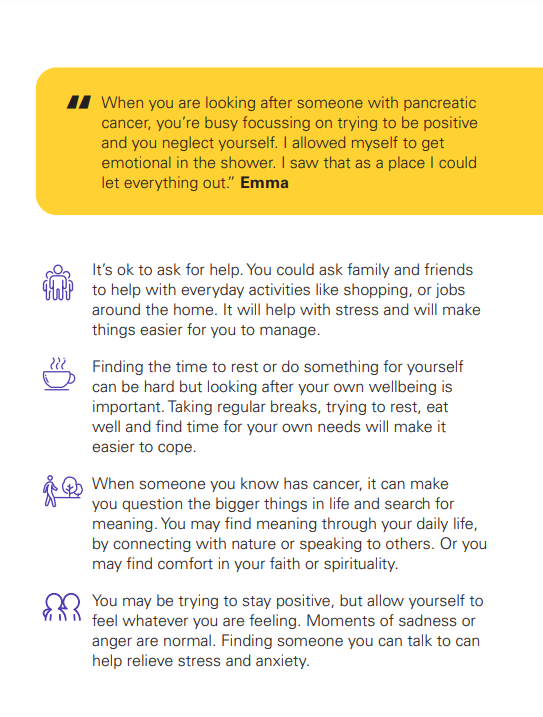
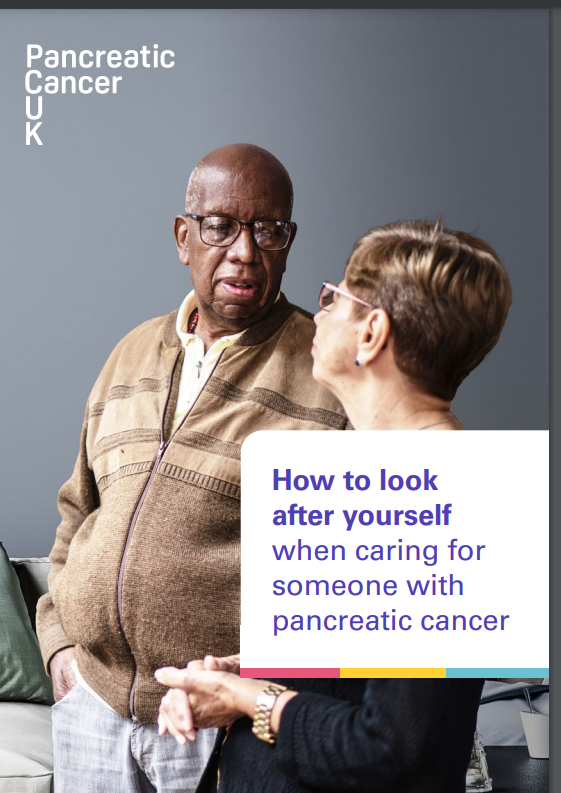
Pancreatic cancer has a huge emotional impact on patients and carers, but up until now the charity had not developed any particular resources addressing this.
This involved a research review, interviews, forum and social media consultation and formation of a co-production group.
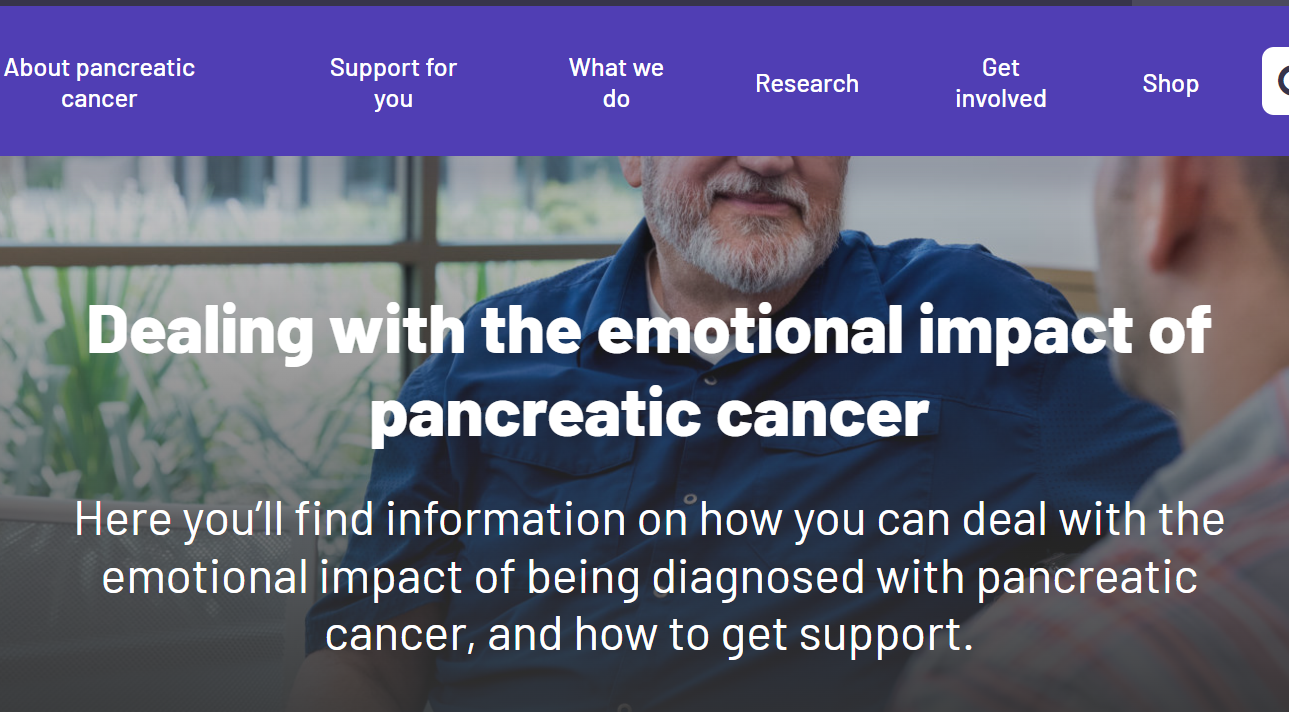
Using this insight new leaflets and two more detailed web pages were produced.
The leaflets are specifically designed to provide bite-size, support content at a time when people are overwhelmed and distressed.
The web content goes into further depth and provides practical strategies and tips from patients and carers that people can act on.
The charity are very happy with the outcome and we hope it make a difference to patients and carers at a very difficult time.
Feedback from Emily Morgan, Senior Information Manager:
"We’re really pleased with it all – it’s definitely filled a gap in our info. Thanks for all your work on it – it was great to try something different with this, and I think it’s really paid off."

Blood Cancer UK, clinical trials blogs
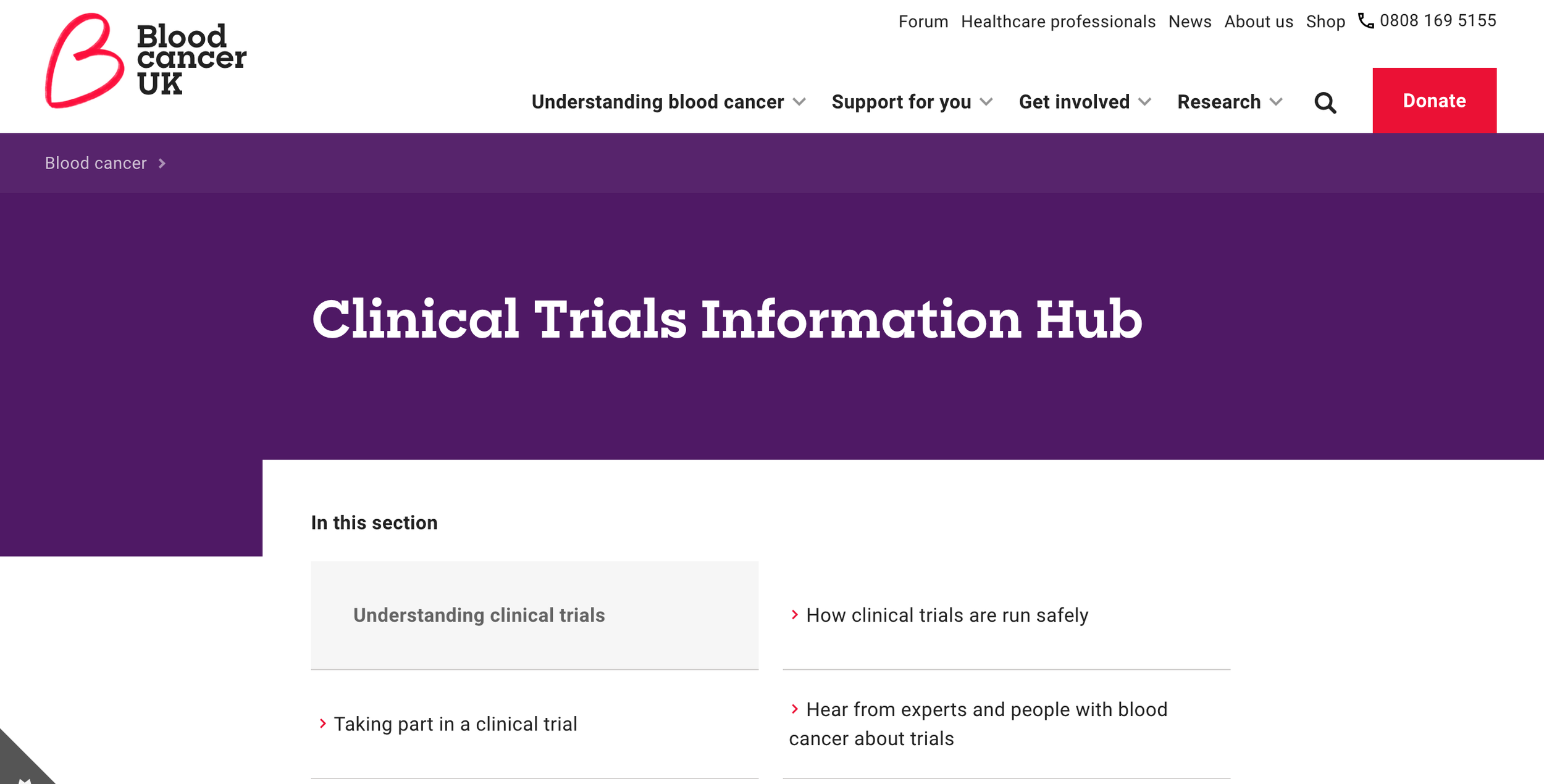
Interview-based blogs with patients and health professionals to help the charity ‘tell the story’ of what involvement in a clinical trials is like. The idea was to help broaden the reach of the clinical trial service by sharing the experiences of people like Shibu, nurse Millie and Andrew Pettitt.

The Patient Information Forum: Keeping health literacy in the spotlight
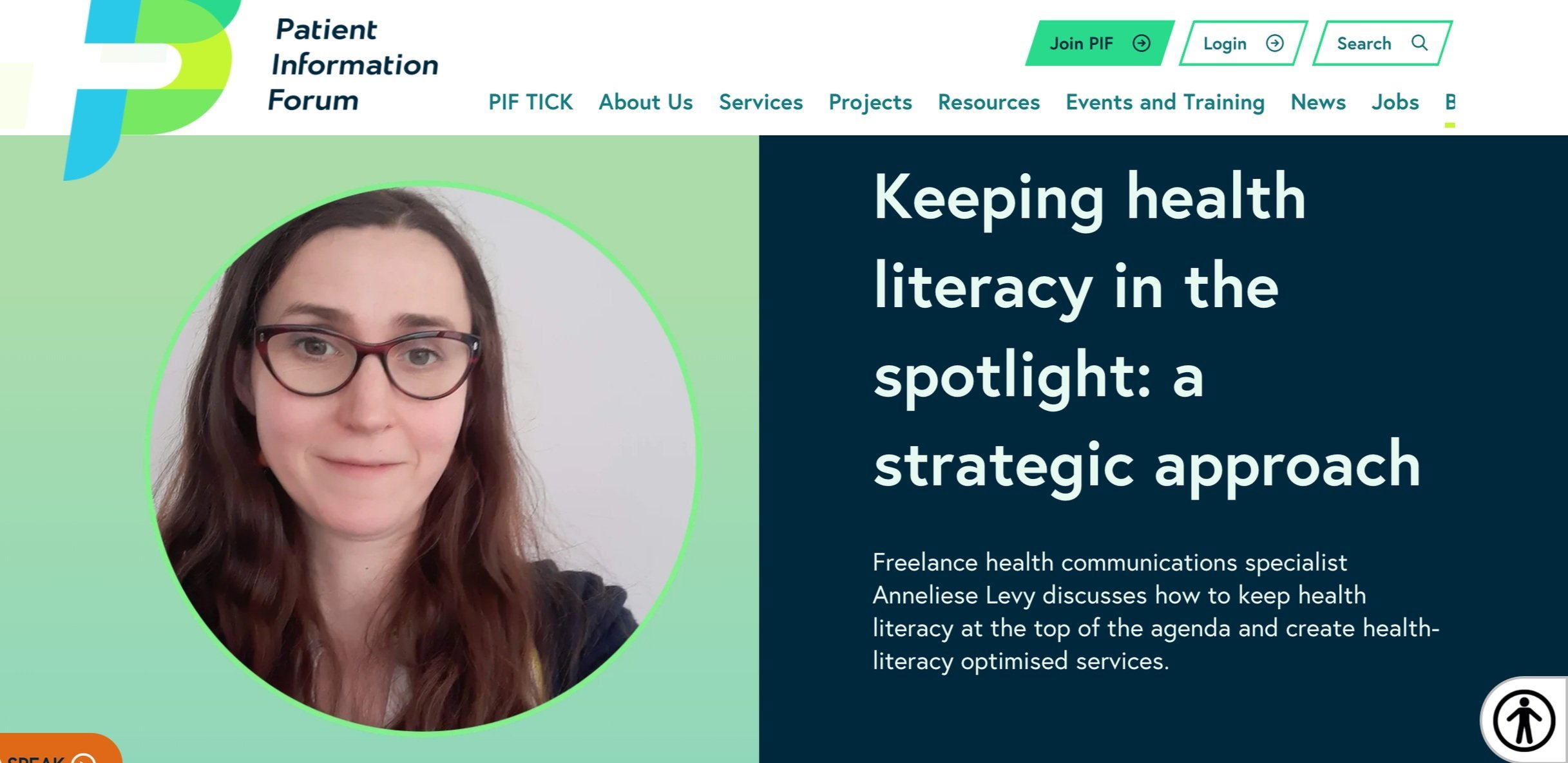
Anneliese’s guest blog for the Patient Information Forum discusses how to keep health literacy at the top of the agenda and create health-literacy optimised services: This blog was originally published on the PIF website https://pifonline.org.uk/blogs/health-literacy-spotlight/
Health literacy is more important now than ever before. The outbreak of coronavirus pandemic has also meant we are living through an ‘infodemic' – an overabundance of information, some accurate and some not, that occurs during an epidemic.
However, a recent systematic review from Baccolini and colleagues found that: “Low health literacy is a public health challenge throughout Europe, where one in every three, to almost one in every two, Europeans may not be able to understand essential health-related material.”
As the Patient Information Forum’s own invaluable infographic highlights, the impacts of low health literacy are far reaching, contributing to increased health inequalities, impact on self-care abilities and fundamentally leading to increased preventable ill health and death.
The COVID-19 pandemic has also uncovered and exacerbated multiple health inequalities that already existed. Tackling the issue is vital.
An increased focus on health and exposure to health messages, may have fuelled mistrust, alongside a growing appetite amongst the public for education and support to improve health literacy.
For example, the 2021 Edelman Annual Trust Barometer shows globally the trust in all information sources is at a record low but the public are placing more importance on increasing their science literacy.
What is being done to tackle low health literacy?
In the UK, the NHS is promoting online health literacy courses for staff and the Accessible Information Standard.
Charities such as the Good Things Foundation are working towards upskilling people and improving digital and health literacy.
Last year I worked on a pharmaceutical industry project for The Difference Collective. This sector is also now prioritising health literacy in terms of optimising its health content and materials for their various audiences.
Keeping a focus on health literacy
Health literacy factors in health behaviour. A recent report by the Health Foundation concludes that in England government policies to improve health have focused on individual behaviour change, with very limited success.
The Health Foundation advocates a move away from this and highlights that: “Population-level interventions that are less reliant on individual agency and aim to alter the environments in which people live should form the backbone of strategies to address smoking, alcohol use, poor diet and physical inactivity.”
I feel strongly that in order to keep health literacy at the top of the agenda there needs to be a similar top-down approach.
Focused on ensuring institutions and organisations provide healthcare and health information that meets everyone’s health literacy needs, where they are now.
Creating optimal environments that enable people to understand and improve their own health, whatever their situation.
Knowledge of these issues and buy in from leadership teams and decision-makers will ensure health literacy is included in policy and overarching strategies for health charities and other organisations.
How can you create health literacy optimised services?
The PIF TICK quality mark and the Accessible Information Standard are two interventions that can help ensure this higher-level approach to including health literacy in patient information strategy.
Audience mapping and an understanding of health information reach is vital to this strategic approach.
Are you producing the information and support your users need that is accessible and right for them?
All health information producers should have an audience and insight and strategy underpinning their work.
This approach makes sense as research shows health messaging is more effective when it’s crafted to target different groups of people, or tailored to individuals.
This is where audience segmentation comes in.
Segmentation can be focused on targeting different demographic groups. For example based on age, socio-economic status, or ethnicity.
But messaging and content can also be tailored based on other psychological, behavioural or social factors.
Examples include people’s access to social and media resources, e-health literacy skills, vaccine beliefs or attitudes to antibiotic resistance.
Health literacy and accessibility audits can also help highlight areas for improvement.
Whilst, readability is important, health literacy work should go further than this.
For example, a systematic review showed health literacy interventions for cancer patients are most successful when they combine face-to-face interactions with health professionals and the use of multimedia technologies or devices as well as ensuring an emphasis on identifying vulnerable individuals and groups with low health literacy.
Something to consider when developing new services or health content.
Where next?
This issue is a complex one, but steps you could take today include asking your leadership team whether health literacy is included at a strategic level.
If you’re a decision-maker yourself, think about how you could take a step-back and include some audience mapping and segmentation into your work to identify those most at need and to ensure you are working to meet their needs.
Even where budgets are tight and teams are busy taking this pause could mean that funds and time are targeted most effectively.

Newly diagnosed guides, Pancreatic Cancer UK
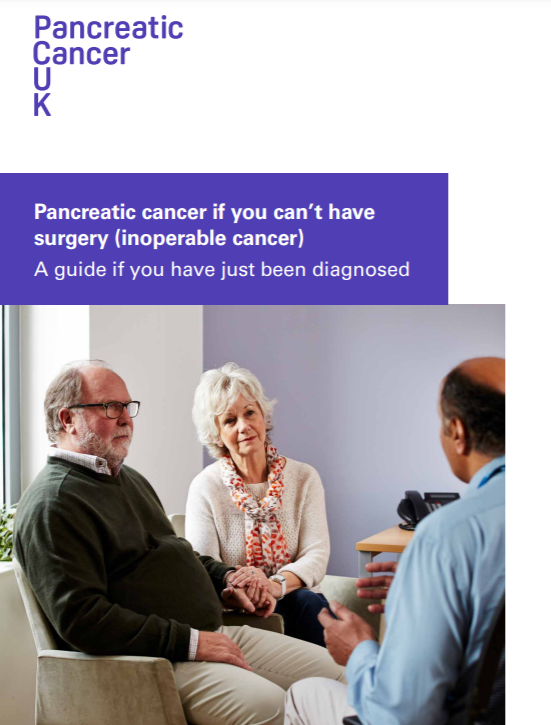
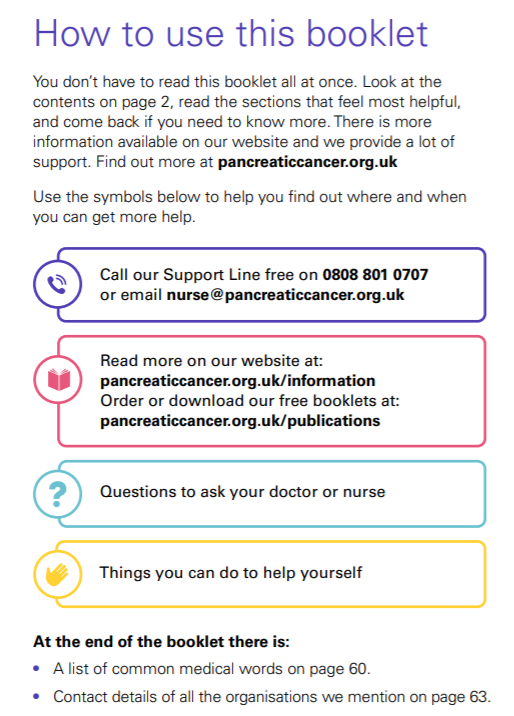
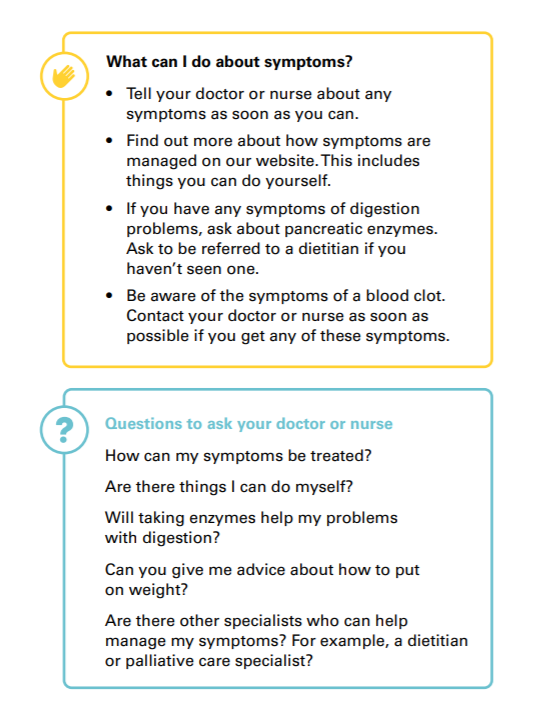
Re-development of two new booklets for Pancreatic Cancer UK, for people with operable and inoperable cancer. The redevelopment involved extensive user-testing including a survey, one-to-one interviews and at a community group for vulnerable older people in East London.
What was the impact?
Results from the user testing were used to inform content, writing style and design. In particular, use of symbols and boxes to help people navigate through the resource. As well as adding key elements such as ways people can take control of what is happening to them at a distressing and disempowering time.
The charity reported that the new booklets are popular and they have already had a ‘great response’ to them. Work is underway to align other booklets produced by the charity with this approach.
Feedback from Emily Morgan, Senior Information Manager
Anneliese helped us develop two new booklets for people recently diagnosed with pancreatic cancer. We wanted to be able to provide more tailored information to patients, based on an individual’s diagnosis. We also wanted to make the information more accessible, as we knew from previous feedback that patients need the key facts at diagnosis, but too much information can be overwhelming. Anneliese developed the content for both booklets, and also worked with our designers to develop a new design which was more accessible, using features such as symbols to guide people through the information.
She undertook user review with our target audience to make sure the information was clear and easy to use, and also ensured it was engaging and practical, with key facts, questions to ask, and things people can do themselves. We’ve already had a great response to these booklets, and are excited to be able to offer patients tailored information at what is a difficult time.

Transition guide, Crohn’s & Colitis UK
Co-produced with young people and their parents. Using health psychology insight to guide teenagers through the potentially difficult transition to adult medical services.
Co-produced with young people and their parents. Using health psychology insight to guide teenagers through the potentially difficult transition to adult medical services.
The booklet was created alongside a series of interviews with young people living with Inflammatory Bowel Disease.
Read our blog and find out more about the project.
What was the impact?
Formal evaluation showed that 71% of users found the resources very useful.
Feedback from David Risser, Director of Information and Support Services, Crohn’s & Colitis UK
“Anneliese has done tremendous work for us. She produced the first version of a guide for young adults that has become one of our core booklets, distributed by doctors and nurses throughout the UK. She is a pleasure to work with – intelligent, painstaking in the quality of her work, efficient and direct in communications.”